Signed in as:
filler@godaddy.com
Commonly Referred to as “Crazy Jack”
There are few on Carroway Island who remember exactly when Jack Mercer first arrived with the old Army tent.
Some insist he was born on the island and simply wandered too far into himself after Korea. Others maintain he came over on the freight ferry sometime during the winter of 1971 carrying nothing but a duffle bag, a broken-field radio, and three unopened tins of coffee.
Jack himself has offered all versions at one time or another.
In any case, the tent has remained for years now along the meadow grass near the southern shoreline, set back just enough from the tide line that the winter storms do not carry it off completely.
Though repeatedly encouraged to accept proper lodging, Jack has always declined.
“Canvas breathes better,” he once explained to Deputy Harker.
“Roofs make a man soft in the corners.”
The people of Carroway Island have long since stopped arguing with him.
Meals are quietly left aside at various establishments throughout the week, though Haddie’s remains his preferred destination whenever weather permits. It is generally understood that if a bowl of chowder or a sandwich disappears from the rear kitchen shelf without explanation, Jack has already passed through.
No account books appear troubled by this arrangement.
Jack is a veteran of the Korean War, a fact known not because he speaks of it directly, but because fragments surface unexpectedly in conversation. Higgins boats, frozen radios, artillery smoke, troop movements, and names no one recognizes emerge suddenly between comments about tides, gull patterns, or ferry schedules.
His speeches are often difficult to follow.
At times they drift into what the mainland doctors would likely describe as confusion. Yet now and then, buried inside the fragments, there appears something oddly perceptive.
“You listen to engines long enough,” Jack once remarked outside the market, “you can tell which ones are lying.”
Nobody present claimed to understand precisely what he meant, though several later admitted the ferry gearbox failed two days afterward.
Children are warned not to mock him. Visitors occasionally do anyway, though seldom twice.
Jack keeps a weathered American flag beside the tent year-round. During storms he lowers it carefully before securing the lines. On Memorial Day and Independence Day, he is known to stand near the ferry landing wearing his old field jacket, saluting each arriving vessel regardless of who may be aboard.
Whatever difficulties the years placed upon him, no one on Carroway Island has ever questioned where Jack’s loyalties remain.
As with many things on the island, he is simply considered part of it now.
Like the ferry.
Like the fog.
Like the tide itself.

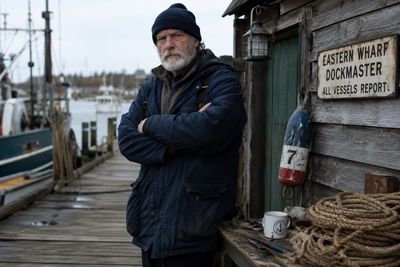
Dockmaster of the Eastern Wharf
There are men on Carroway Island who claim to understand the sea.
Then there is Elias Pepples, who believes the sea cannot be trusted under any circumstance.
Known to most islanders simply as “Square Knot,” Mercer has overseen the eastern docks for longer than most residents can remember. A former Navy deckhand with a permanent squint and a voice roughened by salt air and decades of disappointment, Pepples approaches every arriving vessel as though catastrophe is only moments away.
According to Pepples, it usually is.
He distrusts:
Despite this, no ferry captain approaches the Carroway docks without first checking Pepples’ signal lantern hanging from the pilings beside his shack.
His greatest obsession, however, is knots.
Every rope on the island’s wharf is tied, retied, cataloged, and silently judged by Pepples He can reportedly identify over eighty forms of maritime knots by touch alone and has been known to untie perfectly acceptable dock lines in the middle of the night simply because “they looked lazy.”
Children claim he once cut loose an entire visiting yacht because the owner used what Mercer described as “a decorative insult pretending to be a cleat hitch.”
Pepples denies the story.
The yacht owner does not.
Visitors often find him seated beside Wharf 2 at dawn, methodically oiling rope pulleys while muttering predictions about storms, erosion, federal regulations, weak coffee, or “the eventual collapse of modern standards.”
When asked if he enjoys living on Carroway Island, Pepples reportedly answered:
“Enjoyments got nothing to do with survival.”
And yet, during heavy fog or rough weather, island residents still look first toward the eastern dock shack. If Pepples' lantern is lit, they know the harbor remains open.
Which, by island standards, is practically optimism.
The Pie Judge of Carroway Island
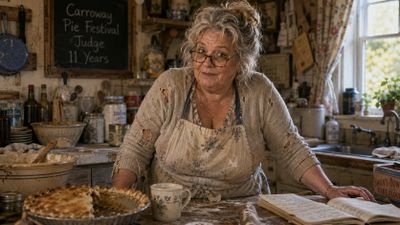
Nora Burgess has lived alone for eighteen years, though no one on Carroway Island would ever call her lonely.
Since her husband died of a lung disease, Nora has filled the quiet rooms of her house with heat, flour, steam, and opinion. Her kitchen has become one of Carroway’s unofficial meeting places, part bakery, part counseling office, and part courtroom.
For Nora, cooking is not a pastime. It is how she speaks, how she serves, and how she keeps herself necessary.
For the past eleven years, she has served as judge of the Carroway Pie Festival, a position she treats with almost judicial seriousness. Her decisions are rarely accepted quietly. More than one blue ribbon has caused a family feud, and more than one losing baker has sworn never to enter again—only to return the following year with a different crust recipe and a wounded sense of pride.
Still, the women of Carroway seek her out.
They come for advice on pie dough, marriages, church suppers, cough remedies, difficult daughters, stubborn husbands, and whether a person should forgive someone before or after dessert. Nora’s advice is often firm, sometimes wrong, and almost always delivered with a slice of something warm.
Her kitchen door is rarely locked. She knows when a stew needs salt by smell alone, can roll a crust without looking down, and believes nearly every problem in life has a “better way” if people would only listen.
Her favorite phrase is:
“That’s fine, dear. But I wouldn’t do it that way.”
That one sentence has started more arguments on Carroway Island than bad weather.
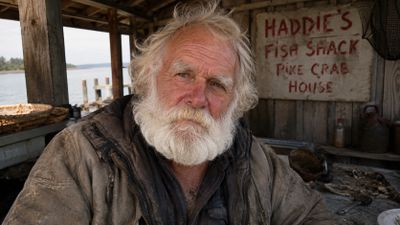
Old Shucks was hurt bad in an oyster boat accident out on the Bay. A heavy gaff broke loose from the skipjack’s mast and came crashing straight down onto his leg, breaking it in three places. Folks on Carroway still say they could hear him screaming clear across the marsh.
It took four surgeries and nearly eighteen months before the doctors finally pieced the leg back together. Even then, it never healed right. He walked with a crooked hitch afterward, especially in cold weather, and could no longer work the oyster beds the way he once had.
Most men would have left the water entirely.
But while Shucks could no longer dredge oysters like before, he could still open them faster than almost any waterman on the island.
To keep food on the table, he began shucking oysters weekends at Haddies’ Fish Shack and Pike Crab House. Before long, word of his speed crossed the ferry to the mainland. Waterfront seafood restaurants started hiring him for festivals, raw bars, and weekend crowds, where customers gathered just to watch him work.
They said his oyster knife moved so fast it sounded like somebody shuffling cards.
For the past seven years, shucking oysters has been how Old Shucks made his living.
Old Shucks usually downs three or four cups of coffee before opening oysters. Some say he strengthens it from a dented metal flask he keeps buried deep in his backpack, though nobody has ever proven it and few much care one way or another.
These days he has also become something of an island weather consultant.
Most mornings, folks passing him along the shell road stop to ask what his bad leg is telling him. Ever since the accident, the ache in it has become an unusually reliable predictor of storms, cold snaps, and heavy tides.
Though Shucks has a habit of exaggerating matters.
“A nor’easter’s building out there,” he might warn dramatically while pointing toward perfectly blue skies. “By tomorrow this whole island’ll be floating past Baltimore.”
Sometimes he is wrong.
Just often enough, however, he is right that people continue asking.
Every year during Carroway Island’s annual festival, he is called upon to run the oyster booth and judge the famous oyster races — an honor he takes more seriously than most church deacons take communion.
His reputation eventually earned him a feature in Chesapeake Bay Magazine, along with an interview by The New York Times — though islanders still argue whether that article will ever actually appear.
“Mainland folks always promise things,” Shucks says. “Tide usually carries half of it away.”
Able Hargrove left Carroway Island at twenty-three determined to make something larger of himself on the mainland.
He found work with oyster farms near Cape Charles, where the pay was steady and the work clean.
The oysters were cultivated in careful rows and harvested with practiced efficiency. Everything operated on schedules, fuel receipts, and production counts.
Able tried hard to admire it.
But after a year he realized he missed the uncertainty of the Bay.
He missed searching the oyster beds instead of managing them. He missed the roughness of dredging, the shouting across decks, the smell of diesel and salt marsh, and the way islanders measured wealth less by money than by whether a man showed up when needed.
Mostly, he missed being known.
So, one gray November morning, carrying more embarrassment than luggage, Able boarded the ferry back to Carroway expecting questions he did not much wish to answer.
Instead, most islanders simply nodded as though his return had been assumed all along.
The following morning, he was back aboard an oyster boat with a dredging rake in his hands, pulling
against the Bay wind and smiling harder than he intended to.
“Rows,” Shucks later remarked dismissively when hearing about the oyster farm operation. “Ain’t natural for oysters to stand in lines like schoolchildren.”
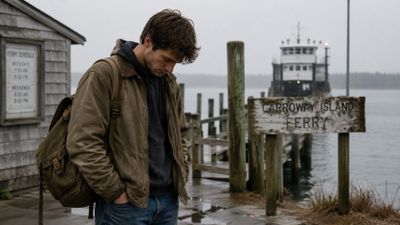
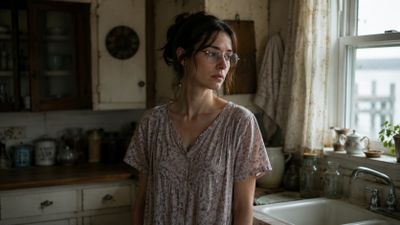
Elisa Merritt lives in the weathered gray cottage at the edge of Low Marsh Road with her mother, Ruth, whose health has been failing slowly for the better part of six years.
Nobody on Carroway Island speaks of Ruth Merritt as dying.
They speak instead in softer island measurements.
“Some days stronger than others.”
“Still keeping on.”
“Had a rough tide yesterday.”
The island prefers gradual language for gradual losses.
At twenty-eight, Elisa has become so closely associated with caretaking that many islanders no longer think to ask where she might have gone had life arranged itself differently. They ask about her mother’s appetite. Her medicine. Whether the coughing has improved. Whether the damp spring air has been hard on her breathing.
Very few ask Elisa how she herself is doing.
Not out of cruelty.
Simply because caretaking work has always been nearly invisible on Carroway, especially when performed by women.
Nora Burgess brings chowders and pies uninvited, setting them down on the porch rail with enough force to suggest refusal would be insulting. Old watermen remove their caps respectfully when discussing Ruth’s condition but rarely notice Elisa standing there holding the weight of the entire household together with grocery lists, ferry schedules, insurance forms, and sleeplessness.
Only Ira Crowley from the Ledger occasionally asks:
“How’re you holding up?”
Even then Elisa often answers too quickly.
“Fine.”
She says it the way islanders discuss weather they cannot change.
Most evenings she watches the ferry arrive from the mainland through the kitchen window while washing dishes. She knows the schedule by heart without ever intending to learn it. The long departure horn carries across the marsh at nearly the same hour each evening, and she always pauses when she hears it.
Not dramatically.
Just long enough to imagine elsewhere.
She does not resent her mother, though there are moments she resents the shape her own life has taken around illness. The distinction matters greatly to her. Ruth Merritt had once been among the island’s strongest women, sharp-minded, quick-handed, and known for rowing through weather that kept larger men tied to dock.
Frailty arrived slowly and offended her deeply.
Sometimes Elisa catches her mother watching her with an expression neither of them mentions aloud. It is the look of someone measuring herself against another person’s lost years.
Their hardest conversations are the ones they never begin.
Elisa keeps several notebooks hidden in the bottom drawer beside her bed. Inside are careful sketches of marsh grasses, ferry passengers, weather patterns, abandoned houses, and shoreline measurements she has quietly tracked for years. She knows which stretches of Carroway have disappeared fastest and which old footpaths now vanish underwater during high tide.
No one on the island knows she has been corresponding with a coastal professor on the mainland who once praised her observations and encouraged her to study environmental science formally.
She never answered his last letter.
Sometimes she imagines leaving.
Not for excitement.
Not even for opportunity exactly.
But simply to wake one morning and belong entirely to herself.
Then Ruth coughs from the next room, or the ferry horn sounds across the marsh, or somebody knocks asking after medicine deliveries, and the thought folds itself quietly away again.
Able Hargrove understands her better than most.
After returning from the mainland, he once found Elisa standing alone beside the ferry dock long after dark.
“You thinking of leaving?” he asked gently.
Elisa watched the mainland lights flickering faintly across the water.
“Sometimes,” she admitted.
Able nodded slowly.
“Funny thing,” he said. “When you’re over there, you spend half your time missing this place. When you’re here, you spend half your time wondering about over there.”
Neither spoke for a while after that.
The ferry arrived.
Nobody boarded.

Something is happening on Carroway.
Meet the islanders. Discover the secrets they’d rather keep buried. Explore the places where strange things have been seen and learn a few things about the island that you won’t find in any ordinary visitor’s guide.
The Carroway Creeper is FREE when you join the Carroway Island Community.
Come on in.